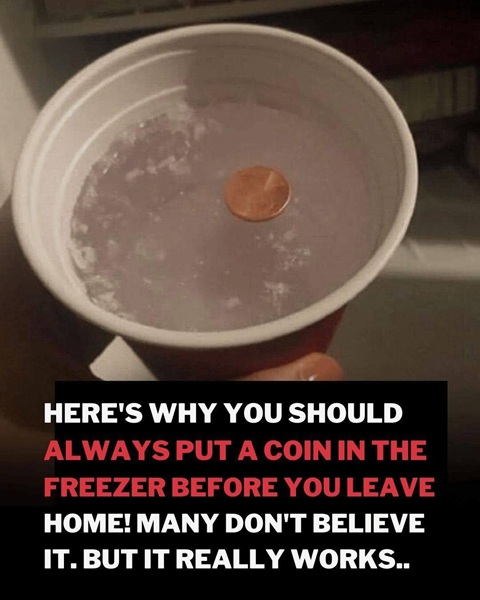
The science behind the coin-in-a-cup method is simple yet effective:
-
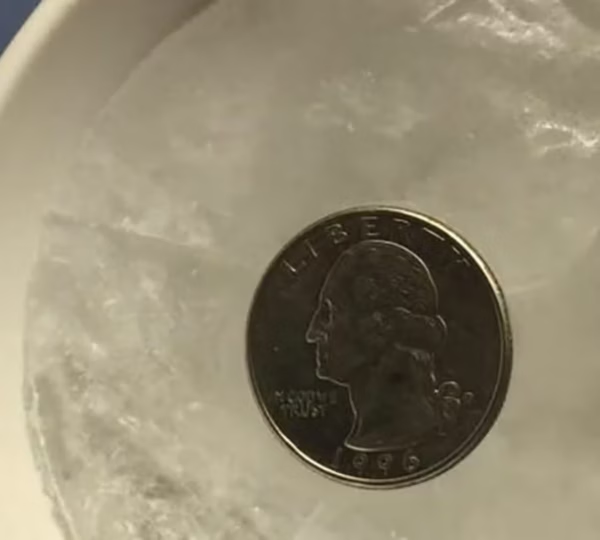
Stable Freezer: If the freezer maintains a sufficiently cold temperature (below 0°F / -18°C), the coin remains on top of the ice. This indicates that the ice—and by extension, your food—has not thawed.
-
Temporary Power Loss or Thawing: If the freezer loses power long enough for the ice to melt, the coin will sink into the water. When power is restored and the water refreezes, the coin may freeze partially submerged or at the bottom of the cup.
By checking the coin’s position after a suspected power outage, you can quickly determine whether frozen food has been exposed to temperatures that may have allowed bacterial growth.
Advantages of the Coin-in-a-Cup Method
-
Simple and Affordable: No fancy equipment or temperature sensors are needed. A cup, water, and a coin are all that’s required.
-
Clear Visual Cue: Unlike relying on smell, texture, or appearance, which can be misleading, the coin provides a definitive indicator of thawing.
-
Non-Invasive: The method does not require opening the freezer repeatedly, which helps maintain internal temperature.
-
Continuous Monitoring: Because the cup stays in the freezer permanently, it provides long-term protection, making it especially useful for households prone to intermittent power loss.
Limitations and Considerations
While highly effective, the coin-in-a-cup method has a few limitations:
-
Not a Replacement for Thermometers: It indicates that thawing has occurred, but it does not provide exact temperatures. For precise monitoring, a freezer thermometer is recommended alongside the coin method.
-
Partial Thawing: In very large freezers, items located farther from the ice cup may experience temperature fluctuations differently. Multiple cups or a thermometer can improve accuracy.
-
Frozen Food Type Matters: High-risk foods like meat, fish, and dairy should still be treated cautiously even if the coin has not moved, especially during extended outages.
-
Accidental Disturbance: If someone removes or moves the cup, the visual cue may be compromised. It’s best to place the cup in a consistent, central location.
Food Safety Tips During Power Outages
In addition to the coin-in-a-cup method, there are several best practices for keeping frozen food safe:
-
Keep Freezer Doors Closed: Every time the freezer door opens, cold air escapes, raising the internal temperature. Limiting access helps preserve food.
-
Use Ice Packs or Dry Ice: In prolonged outages, dry ice or frozen gel packs can help maintain safe temperatures.
-
Group Foods Together: Packing items tightly helps them stay colder longer.
-
Monitor Temperature: Ideally, a freezer thermometer should read 0°F (-18°C) or lower. Food in freezers that stay below this temperature during outages is typically safe for up to 48 hours if full, and 24 hours if half-full.
-
Check Food Consistency: While appearance alone is not reliable, items that are soft, watery, or have unusual odor may have thawed and refrozen.
-
Label and Rotate: Keeping track of when items were frozen and rotating stock can reduce waste and help identify at-risk food after a power outage.
Using the Coin Method While Traveling
The coin-in-a-cup method is especially valuable for vacationers or those who are away from home. Freezer malfunctions often go unnoticed when no one is monitoring the household, creating uncertainty about the safety of stored food.
By leaving the coin in place before leaving home, you can return and immediately determine whether the freezer maintained a safe temperature.
This simple precaution can save you from consuming potentially dangerous thawed and refrozen food, reducing the risk of foodborne illness for you and your family.
Scientific Basis and Validation
The method aligns with scientific principles of freezing and thawing. Water expands approximately 9% as it freezes. When ice melts, the volume decreases, allowing objects resting on its surface to sink. Refreezing locks objects in their new position.
Therefore, the position of the coin relative to the top of the ice provides a direct physical record of temperature fluctuations.
Food safety authorities, including the USDA and CDC, consistently emphasize monitoring temperature and minimizing thawing of frozen food.
While the coin-in-a-cup method is not formally recognized by regulatory agencies, it has become widely accepted as a practical household technique by online communities and food safety enthusiasts.
Enhancing the Method
To improve the reliability of the coin-in-a-cup method:
-
Multiple Cups: Use several cups placed in different parts of a large freezer to account for temperature variations.
-
Different Coin Sizes: Larger coins are more visible, smaller coins may move more easily. Using a combination ensures clarity.
-
Colorful Markers: Attaching a small sticker or marking the coin can make position changes easier to see.
-
Combine With a Thermometer: For households with valuable or sensitive frozen items, adding a thermometer provides additional assurance.
Long-Term Benefits
Using the coin-in-a-cup method is more than a practical tool; it represents proactive household management. By creating a simple visual indicator, families can avoid the guesswork that often accompanies freezer interruptions. Over time, this practice:
-
Reduces Food Waste: Identifying thawed food quickly prevents unnecessary consumption or disposal of safe items.
-
Protects Health: Helps avoid the invisible dangers of thawed and refrozen perishable foods.
-
Promotes Awareness: Encourages household members to monitor freezer conditions and stay mindful of food safety protocols.
While it should not replace comprehensive food safety practices, such as proper storage, labeling, and monitoring with thermometers, this method adds an extra layer of protection and peace of mind.
Whether at home, away on vacation, or during seasonal storms, the coin-in-a-cup method allows households to act proactively, reducing the risk of foodborne illness and maintaining the quality of frozen foods.
Ultimately, a single coin in a cup is a humble yet powerful tool—proof that sometimes the simplest solutions are the most effective.
By combining this method with careful monitoring and common sense, families can ensure that their frozen food remains safe, healthy, and ready to enjoy, no matter what life throws at them.