Life is unpredictable, and sometimes even the most carefully stocked freezer is vulnerable to unforeseen interruptions.
From brief power outages to severe storms, maintenance work, or accidental unplugging, these disruptions can compromise the safety of frozen foods.
While many people rely on their freezers to preserve meat, seafood, dairy, and prepared meals, the risks associated with thawed or refrozen food are serious and often invisible.
Even a short period of thawing can allow harmful bacteria to multiply. Certain bacteria, such as Salmonella, Listeria, and E. coli, thrive in environments where temperatures rise above 40°F (4°C). While freezing slows bacterial growth, it does not kill all bacteria.
Once food partially or fully thaws, bacterial activity can resume rapidly, increasing the risk of foodborne illness. What makes the situation even more dangerous is that thawed and refrozen food often looks and smells normal, making visual and olfactory cues unreliable indicators of safety.
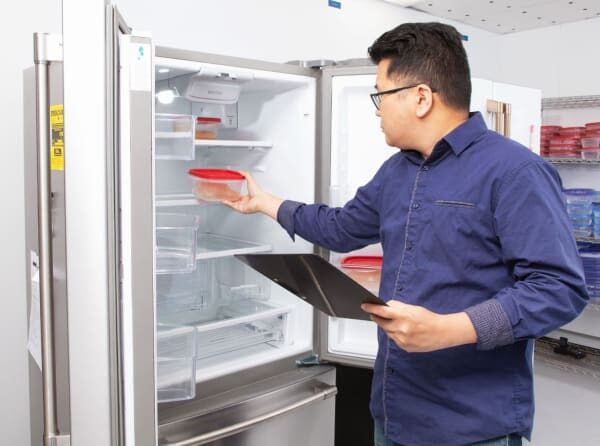
Why Freezer Malfunctions Are Dangerous
Freezer malfunctions can occur for various reasons:
-
Power Outages: A sudden loss of electricity, even for a few hours, can raise the internal temperature of a freezer above safe levels. In some cases, especially in older appliances or in homes with frequent outages, the freezer may warm enough for perishable food to enter the “danger zone” for bacterial growth.
-
Storms and Natural Disasters: Severe weather events can damage electrical infrastructure, resulting in prolonged power loss. This risk is heightened in areas prone to hurricanes, snowstorms, or heat waves.
-
Equipment Failures: Freezers can stop working due to compressor failure, thermostat issues, or mechanical malfunctions. In such cases, food may slowly thaw without anyone noticing.
-
Accidental Human Error: Unplugging during cleaning or maintenance, leaving the door open for too long, or placing hot food inside the freezer can cause localized thawing that compromises the integrity of frozen items.
The Risks of Refreezing Thawed Food
It is crucial to understand that refreezing thawed food does not always make it safe. When meat, fish, or dairy partially thaws, bacteria can proliferate.
Refreezing preserves the texture and appearance but does not eliminate the risk of foodborne pathogens. According to the USDA, perishable foods that have been above 40°F (4°C) for more than two hours should be discarded. In hot environments or during extended power outages, that timeframe can shrink to just one hour.
Even frozen fruits, vegetables, and baked goods are not immune. While low-moisture items may survive thawing and refreezing with minimal risk, foods with high protein content—meat, poultry, seafood, and dairy—are especially vulnerable.
Consuming improperly thawed and refrozen food can lead to food poisoning, which may manifest as nausea, vomiting, diarrhea, fever, and in severe cases, hospitalization.
The Coin-in-a-Cup Method: Origins and Popularity
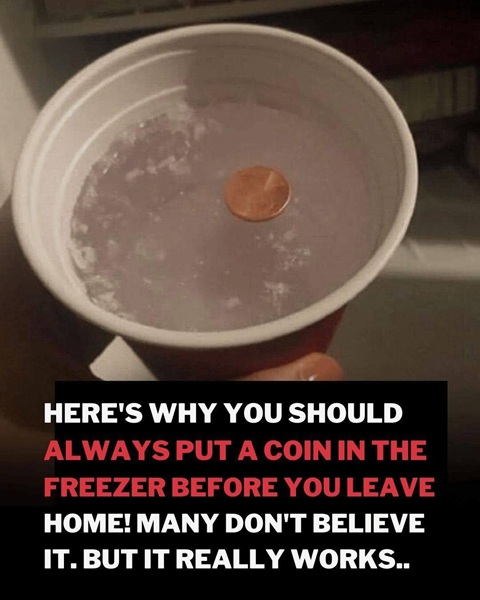
The coin-in-a-cup method is a surprisingly simple and reliable way to monitor whether a freezer has maintained a safe temperature during periods of potential interruption.
Popularized online by Sheila Pulanco Russell, the technique provides a clear visual indicator of whether frozen items may have thawed.
The method works on a straightforward principle: water expands when it freezes and contracts when it melts. By observing the position of a coin frozen into a block of ice, you can determine whether the ice has partially melted and refrozen, which serves as a proxy for whether your food might have thawed.
How to Set It Up
-
Choose a Container: Use a small cup or container that fits easily inside your freezer. Disposable cups, mason jars, or sturdy plastic containers work well.
-
Fill with Water: Pour water into the cup, leaving a small gap at the top to allow for expansion as it freezes.
-
Freeze the Water: Place the cup in the freezer and allow the water to freeze completely, typically overnight.
-
Add a Coin: Once the water is solid, place a coin on the surface of the ice. A small coin such as a penny, dime, or nickel works best because its size allows for clear visibility and noticeable movement if the ice melts.
-
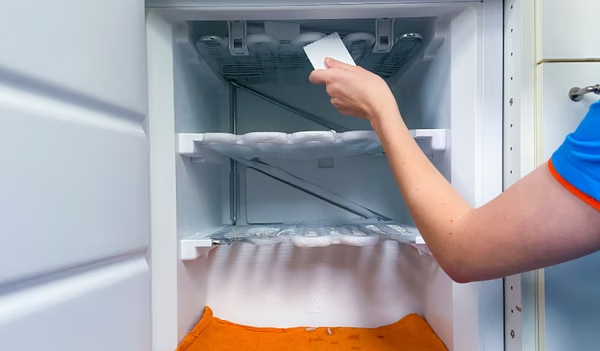
Return to Freezer: Place the cup with the coin back into the freezer. Leave it there permanently as a monitoring device.
How It Works
Publicité