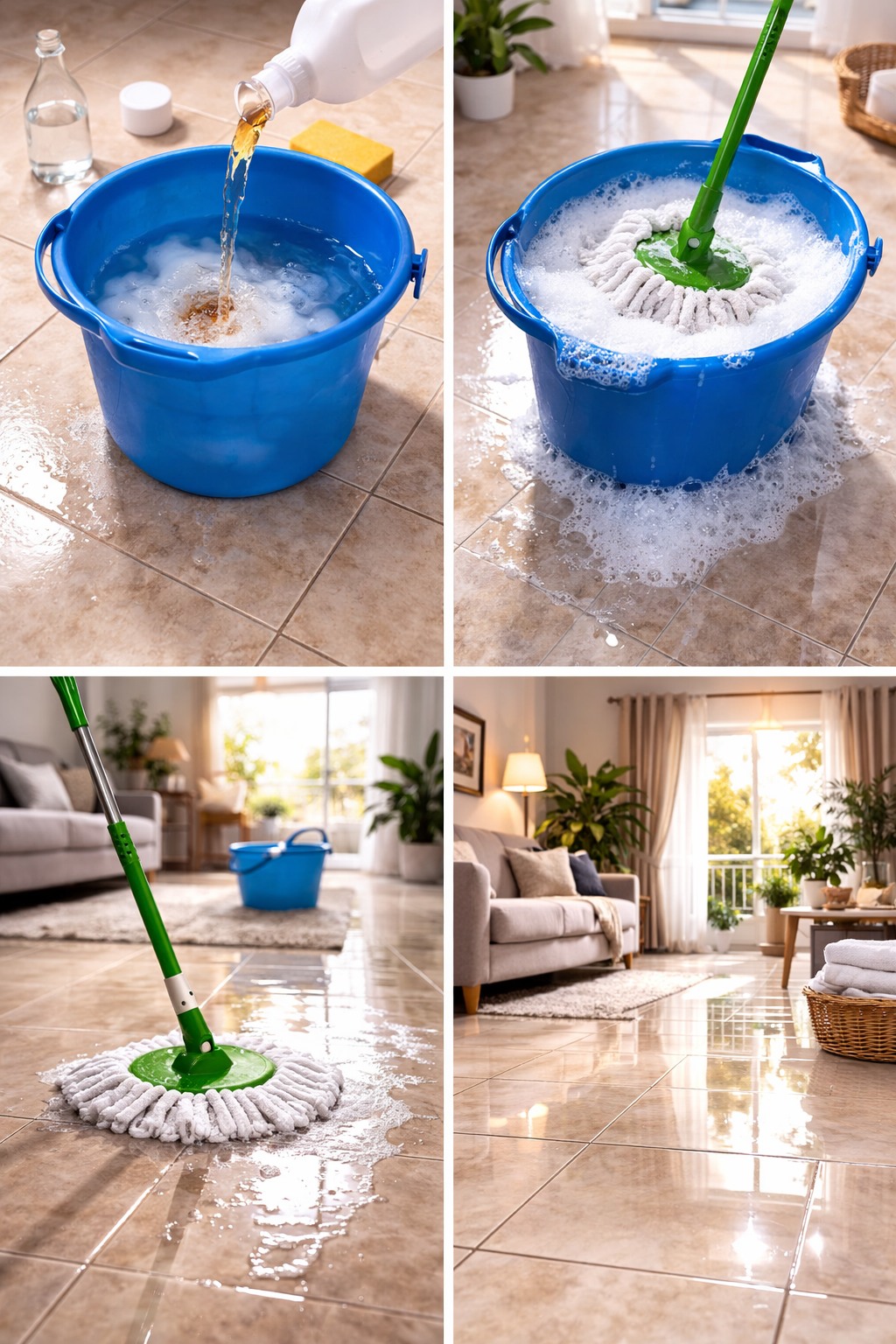
In a bucket, mix 250 ml of vinegar with 4 liters of hot water. Dip the mop in the bucket and wring it out so that it is damp, not wet. Mop the floor, paying particular attention to the stains. After finishing cleaning the parquet, dry it well with a microfiber cloth. This trick is suitable for cleaning all types of parquet: laminate, raw or oiled.
Note that white vinegar should not be used pure on parquet. It must always be diluted with water so as not to damage your floor. Also, don’t let your white vinegar solution sit on the wood for long. After cleaning the parquet, dry it quickly.
Avoid cleaning the parquet with hard brushes, as they can scratch your parquet. Use soft microfiber cloths instead .
-
The tiling
Tile gets dirty faster than other floor coverings, especially if its tiles are white. Pour half a glass of white vinegar into a bucket of hot water, clean your tiles with a mop and rinse well with clean water. Don’t forget to dry your tiles thoroughly after cleaning. If your tiles are very dirty, you can add black soap to your preparation. It is a natural degreasing and stain remover that cleans floors , but also removes stubborn stains and dirt.
Black soap is also suitable for all floor coverings: marble, sandstone, terracotta or slate. Its use is easy. Just dilute a little black soap with hot water, impregnate a microfiber mop with this mixture and clean the floor.
How to maintain the floor?
To keep your floor clean, regular maintenance is recommended to prevent dirt and dust from accumulating and forming layers that are more difficult to remove. Also, avoid mixing chemical cleaners with natural cleaners. This can create chemical reactions and release gases that are toxic to your health.
That said, thanks to natural products, you will be able to recover the shine of your floor, whatever its coating, and without harming your health or the environment.