In every kitchen, proper storage of ingredients is crucial not only for maintaining their freshness but also for ensuring their optimal taste and nutritional value. However, many of us unknowingly store our kitchen staples in the wrong places, leading to premature spoilage and wastage. By understanding the best storage practices, you can extend the life of your groceries and enhance your culinary creations.
Whether it's the temperature, humidity, or even the exposure to light that affects the shelf life of your ingredients, small changes in where and how you store them can make a significant difference. This article will guide you through the correct storage techniques for ten common kitchen items, ensuring your pantry and fridge are organized in the most efficient way possible.
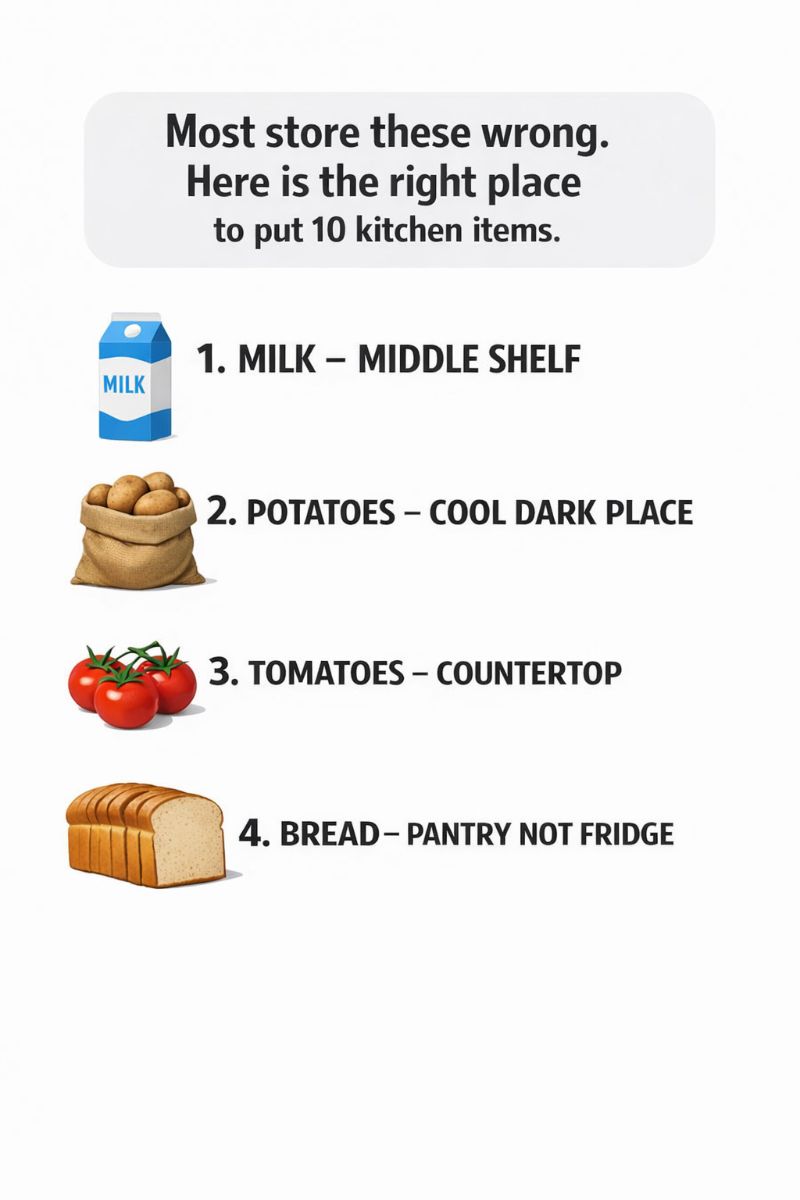
1. Milk: Fridge Door vs. Back Shelf—Where It Really Belongs
Most people place milk in the fridge door for easy access, but this is actually the warmest part of the fridge. The constant opening and closing cause temperature fluctuations that can spoil milk faster. Instead, store your milk on the back shelf of the fridge, where the temperature is more stable and consistently cold, ideally below 40°F (4°C). This can help extend its freshness by several days.
By keeping milk on the back shelf, you ensure it remains at an optimal temperature, preventing the growth of bacteria. Additionally, always keep the milk in its original container, as it is designed to block light that could accelerate spoilage.
2. Potatoes: Why The Fridge Ruins Them (And The Best Dark Spot Instead)
Potatoes should never be stored in the fridge, as the cold temperature can convert their starches into sugar, resulting in a gritty texture and overly sweet taste when cooked. Instead, they should be kept in a cool, dark, and well-ventilated place, such as a pantry or a root cellar, ideally between 45°F and 50°F (7°C to 10°C).
It's important to store potatoes in a paper bag instead of a plastic one to prevent moisture buildup, which can lead to rot. Keep them away from onions, as onions release gases that can cause potatoes to spoil more quickly.