In the hustle and bustle of daily life, the kitchen often becomes a space where convenience takes precedence over precision. However, many of the habits we've developed in the kitchen might be doing us more harm than good. From the way we store our knives to how we dispose of grease, these seemingly small actions can have significant impacts on the longevity of our kitchen tools and the quality of our meals.
In this article, we'll explore ten common kitchen habits that most people do wrong, offering insights and tips on how to correct them. By making a few simple changes, you can improve not only the efficiency and safety of your kitchen but also the taste and quality of your cooking.
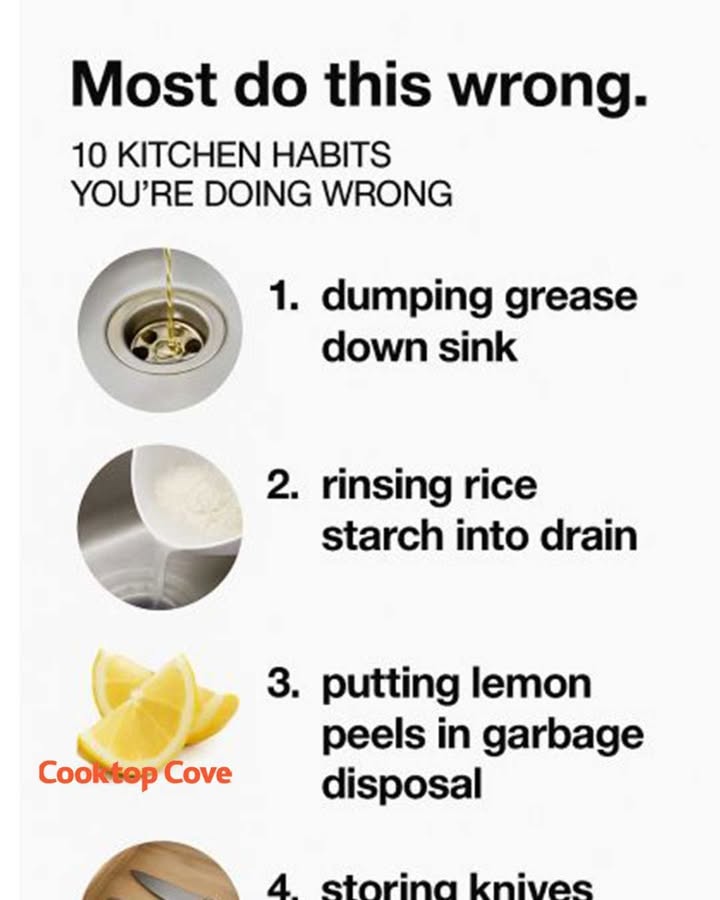
1. The Grease Disposal Mistake
Pouring grease down the sink might seem like the easiest solution, but it can lead to serious plumbing issues. Grease solidifies as it cools, causing blockages in your pipes that can result in costly repairs. Instead, let the grease cool and solidify in a disposable container, and then throw it away with your regular trash. For smaller amounts, you can also use paper towels to wipe out pans before washing them.
2. The Rice Rinsing Error
Rinsing rice before cooking is a crucial step that many skip. This practice removes excess starch, which can make rice clump together or become overly sticky. To do it right, place the rice in a fine mesh strainer and rinse under cold running water until the water runs clear. This generally takes about two to three minutes and significantly improves the texture of your cooked rice.
3. Misusing the Garbage Disposal
Garbage disposals are not designed to handle all food waste. Items like coffee grounds, eggshells, and fibrous vegetables such as celery can dull the blades and cause clogs. Instead, compost these materials or dispose of them in your trash. Always run cold water while using the disposal to help solidify any fats and oils, making them easier to chop up and flush away.
4. Knife Storage Misstep
Leaving knives loose in a drawer is a common mistake that can dull blades and pose a safety risk. Proper storage is key to maintaining sharpness and ensuring safety. Use a knife block, magnetic strip, or blade guards to store your knives. This not only keeps your knives sharper but also reduces the risk of accidental cuts when reaching for a tool.