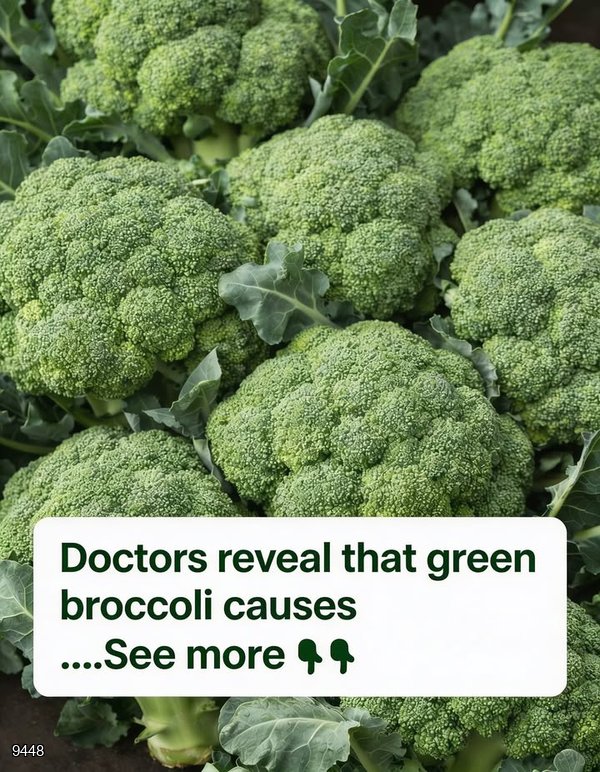
You’ve probably scrolled past those eye-catching posts screaming “Doctors reveal that green broccoli causes…” followed by a dramatic ellipsis, promising some shocking downside to one of the world’s most praised vegetables. It hits hard—especially if you’re someone who’s been loading up on broccoli for its health halo, only to feel a pang of doubt when clickbait suggests it might secretly harm you. The fear is real: what if your go-to superfood is quietly causing problems like thyroid issues, digestive woes, or worse?
The good news? Broccoli remains one of the most nutrient-packed foods you can eat, backed by decades of research showing protective effects against serious health concerns. But like anything, context matters. Let’s break down what these viral claims are really about, why they spread so fast, and how to enjoy broccoli safely without the worry.
 What the Viral “Doctors Reveal” Claims Actually Mean
Those dramatic social media hooks often point to real but overstated science on broccoli’s natural compounds. Broccoli belongs to the cruciferous family (along with kale, cabbage, and Brussels sprouts), which contains goitrogens—substances that can mildly interfere with thyroid function by affecting iodine uptake in very high amounts, especially when eaten raw.
For most people, this isn’t a concern. You’d need to consume extreme quantities—like pounds of raw broccoli daily—for any noticeable thyroid impact, and even then, cooking largely neutralizes the effect. Studies show no evidence that normal servings cause thyroid problems in healthy individuals.
Some posts exaggerate other points too, like trace natural compounds (e.g., formaldehyde from plant metabolism) or vitamin K’s role in blood clotting. These exist in tiny amounts and don’t pose risks for the average person—yet they get twisted into “causes cancer” or “causes clots” for clicks.
The Real Science: Broccoli’s Impressive Benefits Outweigh Rare Risks
Research consistently highlights broccoli as a powerhouse for wellness. Its star compound, sulforaphane (formed when you chop or chew the vegetable), supports the body’s natural detox processes, fights oxidative stress, and shows promise in lab and population studies for reducing risks tied to aging and chronic conditions.
Population analyses link higher cruciferous vegetable intake—including broccoli—to lower overall cancer odds in some reviews, with potential perks for colorectal, prostate, and other types. It also provides fiber for gut health, vitamin C for immune support, vitamin K for bone strength, and folate for cell function.
One large review of observational data found people consuming broccoli more often had modestly reduced risks for certain cancers and all-cause mortality. Moderate intake (like 1–2 servings a few times weekly) correlates with better outcomes for heart and metabolic health.
Potential Downsides: When Broccoli Might Not Play Nice
While broccoli is safe and beneficial for the vast majority, a few scenarios call for moderation or caution:
- Thyroid concerns — If you have hypothyroidism, Hashimoto’s, or iodine deficiency, very large amounts of raw cruciferous veggies could theoretically add stress to thyroid function. Cooking deactivates most goitrogens, so steamed or sautéed broccoli is usually fine in normal portions.
- Blood-thinning medications — High vitamin K content can interact with drugs like warfarin, potentially affecting clotting. Consistent intake matters more than avoiding it entirely—talk to your doctor about stable portions.
- Digestive sensitivity — Some experience bloating or gas from the fiber and raffinose sugars. Starting small or cooking thoroughly helps.
- Excessive intake extremes — Lab data shows ridiculously high doses (equivalent to 100+ cups daily) could stress cells, but that’s far beyond realistic eating.
Easy Ways to Enjoy Broccoli Without Worry