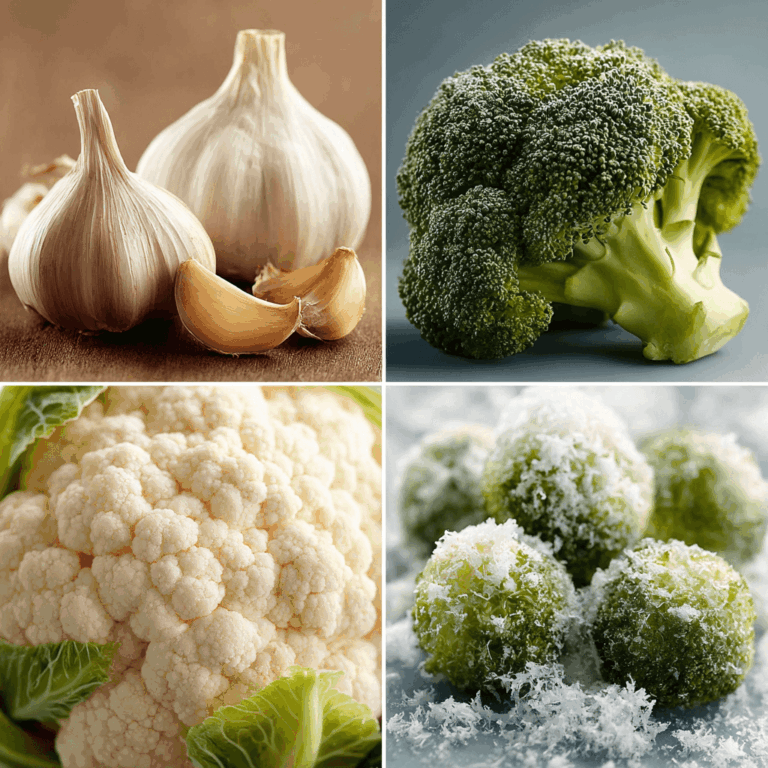
4. Garlic
Refrigeration encourages sprouting and softening, which weakens garlic’s natural antibacterial properties and may allow microbial growth.
 Store in a dry, ventilated area at room temperature.
 High fridge humidity damages garlic quality.
5. Onions
Moisture in the refrigerator causes onions to soften and develop mold, increasing the risk of bacterial spoilage.
Keep whole onions in a cool, dark, dry place.
 Cut onions must be refrigerated and used quickly.
6. Potatoes
Cold temperatures convert starches into sugars and create conditions that encourage bacterial spoilage once potatoes are cooked.
Store in a dark, cool cupboard with airflow.
Never refrigerate raw potatoes.
7. Tomatoes
Refrigeration damages tomato cell walls, leading to texture breakdown and reduced natural acidity, which helps control bacteria.
Store at room temperature to maintain flavor and structure.
 Refrigerate only if overripe and close to spoiling.
8. Honey
Honey is naturally antibacterial, but refrigeration causes crystallization, which does not improve safety and reduces usability.
Store sealed at room temperature.
No refrigeration needed.
9. Bread
The refrigerator accelerates starch retrogradation, drying bread and making it more susceptible to surface mold once removed.
Store at room temperature for short-term use.
 Freeze for long-term storage to prevent mold.
10. Bananas
Cold temperatures damage banana cell structure, causing skin darkening and internal breakdown, which can accelerate spoilage.
Store at room temperature.
Refrigerate only fully ripe bananas to slow further decay.
11. Olive Oil
Refrigeration causes olive oil to solidify and degrade aromatic compounds, reducing its antioxidant effectiveness, which helps prevent microbial oxidation.
Store in a dark bottle at room temperature, away from heat and light.
Final Thoughts
Not everything belongs in the refrigerator. Incorrect storage can create excess moisture, damage natural protective compounds, and in some cases increase the risk of bacterial or mold growth. Understanding temperature, humidity, and airflow helps preserve both food safety and nutritional quality.